

This website has a .gov link

The .gov means it’s official.

Louisiana government websites often end in .gov. Before sharing sensitive information, make sure you’re on a Louisiana government site.

HTTPS Connection

The site is secure.

The https:// ensures that you are connecting to the official website and that any information you provide is encrypted and transmitted securely.

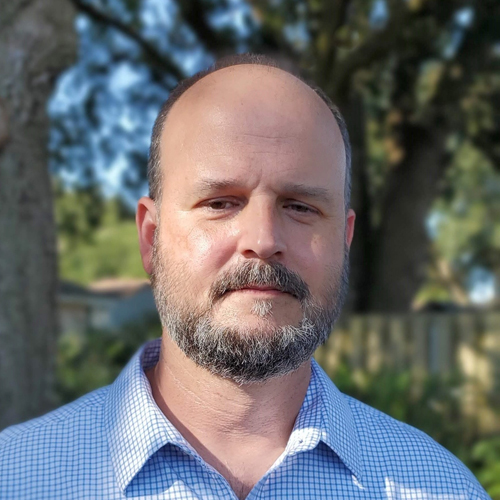
Michael S. Martin, history professor and department head for History, Geography, and Philosophy at the University of Louisiana at Lafayette, researches, teaches, and writes about Louisiana history, public history, and the history of the U.S. South. Martin is a contributing faculty member of the Guilbeau Center for Public History, an affiliated faculty member of the Kathleen Babineaux Blanco Center for Public Policy, managing editor of Louisiana History, and a fellow of the Louisiana Historical Association.


Schedule

9:00 am to 9:45 am
State Library, Second Floor, Meeting Room
From the Quad to the Broadcast Booth: Telling Louisiana’s University Stories
Chris Kennedy, Louisiana Tech’s Dave Nitz: The Voice of Bulldogs
Michael S. Martin and Zachary G. Stein, University of Louisiana at Lafayette

10:00 am to 10:45 am
Cavalier House Books Tent
Book Signing
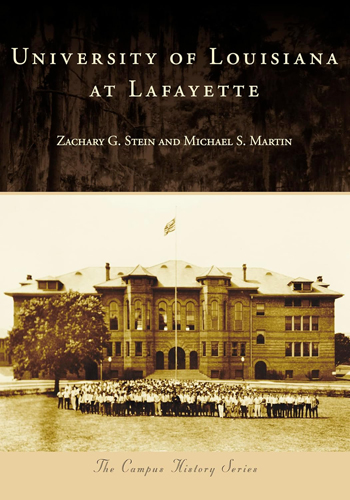

University of Louisiana at Lafayette

Using materials from the vast university archives in the Edith Garland Dupré Library, Drs. Zachary G. Stein and Michael S. Martin trace the University of Louisiana at Lafayette's dynamic history.

The University of Louisiana at Lafayette (UL Lafayette) welcomed its first classes in 1901. Originally a vocational school, the Southwestern Louisiana Industrial Institute, it has since grown in physical size from a small parcel of former farmland to a campus of more than 1,300 acres and a student population of a handful of students to over 19,000 enrollees. Under the leadership of six presidents across more than 120 years, UL Lafayette’s students and faculty have overcome devastating adversities and ushered in dynamic changes. They provided relief amid the Great Flood of 1927, built military training programs during World War II, and developed among the nation’s earliest computer science labs and classes. Dozens of Black students made history in 1954 by being the first cohort to desegregate a previously all-white public college in the Deep South. Today, as an R1 institution, UL Lafayette continues to expand its reach through pathbreaking research, technological and environmental innovation, and dedication to its region’s unique cultures and history.