

Keith M. Finley

Keith M. Finley, PhD is associate professor of history at Southeastern Louisiana University and the assistant director of the Center for Southeast Louisiana Studies. He is the author of From Slavery to Segregation: Reckoning with White Supremacy in the American South and the award-winning book Delaying the Dream: Southern Senators and the Fight Against Civil Rights, 1938-1965.
Schedule
12:15 pm to 1:00 pm
A.Z. Young Park, Author Tent A
Bayou Dilemma: Louisiana in Crisis and Change
Pearson Cross, Keith M. Finley, and Samuel C. Hyde Jr.
1:15 pm to 2:00 pm
Cavalier House Books Tent
Book Signing
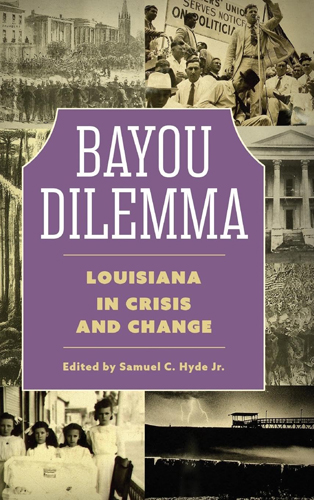
Bayou Dilemma: Louisiana in Crisis and Change
Contributions by Janet Allured, Craig E. Colten, Marcus S. Cox, Pearson Cross, John Bel Edwards, Adam Fairclough, Keith M. Finley, Samuel C. Hyde Jr., John A. Lopez, and Robert Mann
In the fall of 2022, a diverse group of scholars including scientists, historians, political scientists, geographers, and journalists, along with Governor John Bel Edwards, gathered to present views on the challenges that define life in Louisiana. Born out of the symposium, Bayou Dilemma: Louisiana in Crisis and Change is an unprecedented compilation that examines the social, political, environmental, and economic hurdles pervasive to the Gulf South and especially the Bayou State.
The essays collected in the volume illuminate pressing problems confronting Louisiana and its surrounding environs, as well as some of the least known and most frequently misunderstood issues that have affected the state in the past. Topics include the problems of flood control, unequal treatment for African Americans and women, political corruption, endemic violence, and partisan applications of justice, as well as the crisis of coastal erosion, the dilemma of special interests shaping legislation, and the corresponding drain of talent from the state to regions offering improved opportunities. The anthology is a provocative and essential guide that reveals how such trials emerged, how they were overcome or managed, and how they continue to shape the Gulf South’s regional identity. Concentrating on the future well-being of the state and its occupants, the volume suggests fresh pathways for addressing these lingering concerns.