

Eric Seiferth
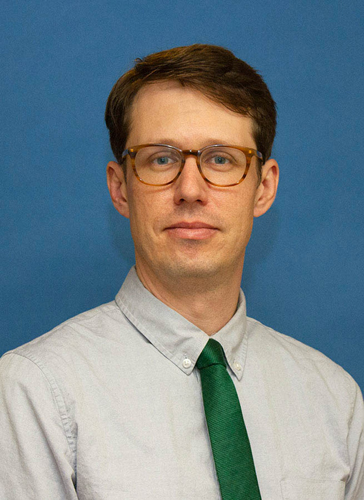
Eric Seiferth is curator and historian at the Historic New Orleans Collection. He is the project lead on the NOLA Resistance initiative to preserve and share stories of the New Orleans Civil Rights Movement and the associated exhibition, The Trail They Blazed. He was also lead curator of the award-winning exhibition Captive State: Louisiana and the Making of Mass Incarceration. He earned his BA and MA in American History from Tulane University.
Schedule
11:00 am to 11:45 am
State Library, Fourth Floor
Captive State: Louisiana and the Making of Mass Incarceration
Eric Seiferth and Nick Weldon
Noon to 12:45 pm
Cavalier House Books Tent
Book Signing
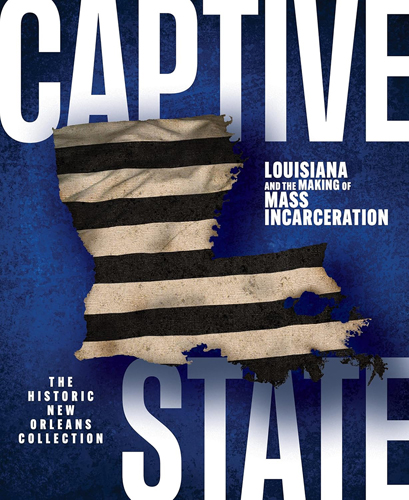
Captive State: Louisiana and the Making of Mass Incarceration
For decades, Louisiana has had the highest incarceration rate in the United States. If it were a country, it would have the second-highest incarceration rate in the world. Far from a modern phenomenon, this distinction is rooted in more than three centuries of history—roots that extend out from the principal city of New Orleans, once the epicenter of the American slave trade, to the agricultural fields of the Louisiana State Prison, commonly known as Angola. In its examination of the state’s long march toward confining more of its citizens than almost anywhere on earth, Captive State: Louisiana and the Making of Mass Incarceration arrives at an irrefutable truth: that the institutions of slavery and mass incarceration are historically linked.
Adapted from the groundbreaking exhibition of the same name, Captive State traces the evolution of laws and customs that created this carceral system and that, by design, have disproportionately harmed Black Louisianians. Captive State accentuates this narrative with profiles of people impacted by these systems, spotlights on key historical objects, and insightful data visualizations. As the human and financial costs continue to mount, this book details the choices that led us here--and asks whether Louisiana is fated to remain captive to its history.
Captive State is supported by a grant from Borealis Philanthropy’s Spark Justice Fund. Distributed for the Historic New Orleans Collection.