

Edward J. Dupuy
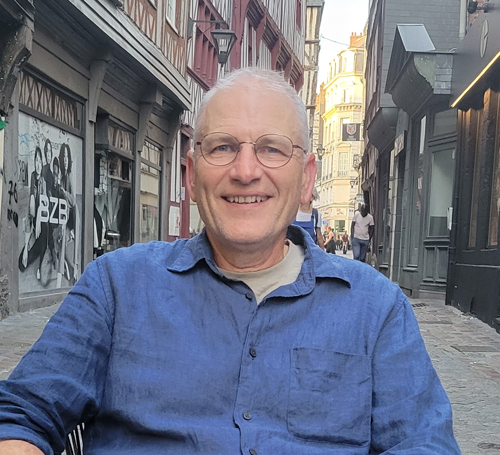
Edward Dupuy is the author of Autobiography in Walker Percy: Repetition, Recovery, and Redemption and more recently Recollections on a Road Between: A Story of My Life. He has published essays on William Alexander Percy, Frederick Douglass, Richard Ford, and Lewis Nordan, among others. A retired senior administrator at a variety of colleges, Dupuy co-hosts the podcast, “Artists Telling Stories.” He lives in Tacoma, Washington, as a transplanted Southerner.
Schedule
9:00 am to 9:45 am
State Library, First Floor, Seminar Center
Voices and Visions: Essays on New Orleans's Literary History
Ruth Caillouet, Mary C. Carruth, Nancy Dixon, and Edward J. Dupuy
10:00 am to 10:45 am
Cavalier House Books Tent
Book Signing
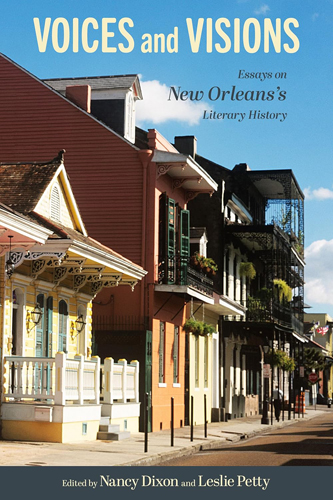
Voices and Visions: Essays on New Orleans's Literary History
Contributions by Ruth R. Caillouet, Mary C. Carruth, Nancy Dixon, Kathleen Downes, Edward J. Dupuy, Shari Evans, Paul Fess, Carina Evans Hoffpauir, Leslie Petty, Heidi Podlasi-Labrenz, Tierney S. Powell, Shanna M. Salinas, Matthew Teutsch, and Marcus Charles Tribbett
Voices and Visions: Essays on New Orleans's Literary History examines a rich combination of writers and texts, from antebellum works like Martin R. Delany’s novel, Blake, and the poetry of Les Cenelles to Patricia Smith’s recent collection of poems, Blood Dazzler. The thirteen essays in Voices and Visions treat two hundred years of literature and include discussions on canonical, contemporary, and experimental writers. Authors often associated with New Orleans such as Kate Chopin, George Washington Cable, and Walker Percy are treated in new ways, as are well-known writers who are not often thought of in relation to the city: Charles Chesnutt, Eudora Welty, Zora Neale Hurston, and Joy Harjo.
Examining this wide array of voices demonstrates the myriad ways New Orleans’s storied past has affected its present. Scholars find enduring themes—race, gender, religion, disease, art—but do so in the context of emerging conversations. Essayists in the volume address such topics as New Orleans as part of the Global South and the Black diaspora, the transformation of New Orleans after Hurricane Katrina, and the recovery of previously lost voices, including those of Native Americans and immigrants. They also discuss the legacy of pandemics and racial violence that in more recent years has been manifest in the COVID-19 outbreak and the Black Lives Matter movement.